

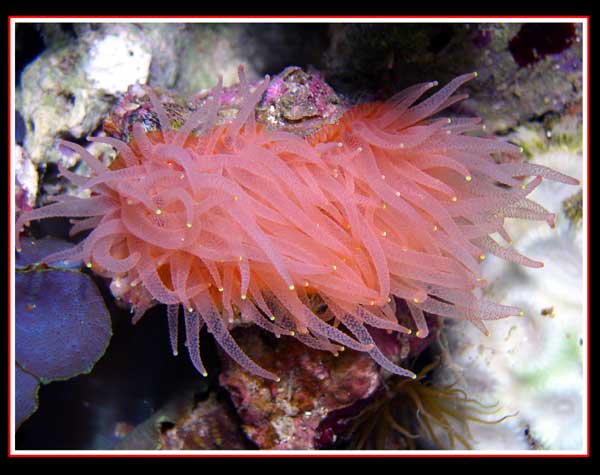
This thing was constructed on September 1, 2009, and it was categorized as Featured.
You can follow comments through the RSS 2.0 feed. You can skip to the end and leave a comment. Trackbacks are not allowed.

rhizo

Have you ever wondered why you’ve (most likely) never seen a Rhizotrochus typus available for sale at your LFS? The obvious reason is that their suppliers probably don’t have them because this coral species is simply not legal to collect, harvest or import into CITES participating countries, including the US.  Go ahead, see if you can find any exportation quotas for ANY Rhizotrochus species, don’t worry, we’ll wait. “But Jake, I see them for sale all over the net” you’ll say and the reason that is is because once the illicit coral has cleared customs and entered the country, there are no laws governing the ownership and resale of this species; all of the regulation takes place on the front end of importation and once they are in the animals are free and clear. We’ve tried to inform some other blogs of the black market nature of these corals but our comments just get deleted and there seems to be a general distaste for even bringing up the legality of Rhizotrochus in the US aquarium trade. Since there are no CITES permits for the importation of Rhizotrochus into the US, Rhizos are intentionally shipped with paperwork for either Euphyllia or Catalyphyllia, Torch and Elegance corals, since these species can look very similar when their tissues are withdrawn. You know what that’s called? Smuggling. The only exception to the CITES permitting quota process is the country of Australia where exporters are alloted collection quotas based on tonnage. However, Rhizotrochus typus does not even occur in Australia so any vendor trying to pass off Aussie Rhizos is outright lying or misinformed.


Other items you might enjoy:

This thing has 21 Comments

  1. Posted September 1, 2009 at 7:44 pm | Permalink

    very interesting. no wonder why these corals are so expensive.

  2. Beary
    Posted September 1, 2009 at 8:11 pm | Permalink

    Now do you guys realize why that senate committee proposed that house resolution to ban species.

    NO ONE LISTENS!!!!

  3. G...
    Posted September 1, 2009 at 8:29 pm | Permalink

    Thanks for helping get the word out Jake!!!

  4. Jmb
    Posted September 1, 2009 at 4:25 pm | Permalink

    I thought the House of Representatives proposed “house” resolutions.

  5. Mike
    Posted September 1, 2009 at 9:37 pm | Permalink

    "there are no laws governing the ownership and resale of this species"

    See this is something I didn't know about either, back when acans were a tad on the "shady" side (I forget why, Japanese acans?) I always wondered why people would be so bold as to sell them openly. Now I know, you can always say you're simply fragging a frag you got.

  6. G...
    Posted September 1, 2009 at 9:43 pm | Permalink

    If a coral was illegally brought in there are laws governing that… The Lacey Act deals directly with this.

  7. G...
    Posted September 1, 2009 at 9:44 pm | Permalink

    dang.. posted too quickly..

    If you sell or posses a coral that was illegally brought in, the Lacey Act covers that portion making it just as illegal as the act of smuggling it.

  8. Posted September 1, 2009 at 6:35 pm | Permalink

    Jake,
    I appreciate you taking the time to inform the reefkeeping community about Rhizotrochus typus that have been sporadically offered by a handful of retailers over the last few years. It is very unfortunate that some people will go to great lengths to intentionally deceive USFW (United States Fish and Wildlife), as all this does is place even greater scrutiny on the trade in coral reef species.

    This hurts all of us who work so hard in this business and try and do the right thing by dealing with the most ethical and responsible suppliers as possible.

    The sad part is the fact that the small group of individuals who are involved with this practice could be a major contributor to regulating our trade and hobby into extinction. This would be catastrophic, negatively impacting hundreds of thousands of people all over the world who rely on this resource for income and sustenance.
    Kevin

  9. shiveley
    Posted September 2, 2009 at 12:25 am | Permalink

    wow, just a quick internet search shows this for sale not only on Ebay, but some otherwise reputable retailers…how sad.

  10. G...
    Posted September 2, 2009 at 1:04 am | Permalink

    Send US Fish and Wildlife Service (USFWS) an email with a link to the coral in question. They'll deal with it properly.

    http://www.fws.gov/le/

  11. Matt Pedersen
    Posted September 2, 2009 at 1:56 am | Permalink

    Yeah, seems folks beat me to the punch. The only way such a coral could be legal to own, possess, or trade within the US is if it came into the US with the proper CITES permits. Dealt with this when I bred and sold orchids…had one particular inportation I tried where the US would grant the import permits if the exporting country would grant the export permits, and the exporting country would only grant export permits if the US would grant the import permits. Thus, the deal never happened, I was out cash for the permit applications, and well…that's that.

    Of course, if such a thing came in as a hitchhiker, it's different than actually smuggling it. There are ways such things can become legal, and they are done at the bequest of the US FWS….i.e. some Orchid species are now available legally through seizure of smuggled specimens that were then permitted to be propagated and thus sold legally.

  12. Ross.C
    Posted September 2, 2009 at 3:55 am | Permalink

    From the CITES Species Database

    http://www.unep-wcmc.org/isdb/CITES/Taxonomy/tax-...

    Appendix II lists species that are not necessarily now threatened with extinction but that may become so unless trade is closely controlled. It also includes so-called "look-alike species", i.e. species of which the specimens in trade look like those of species listed for conservation reasons (see Article II, paragraph 2 of the Convention). International trade in specimens of Appendix-II species may be authorized by the granting of an export permit or re-export certificate. No import permit is necessary for these species under CITES (although a permit is needed in some countries that have taken stricter measures than CITES requires). Permits or certificates should only be granted if the relevant authorities are satisfied that certain conditions are met, above all that trade will not be detrimental to the survival of the species in the wild. (See Article IV of the Convention)

  13. David
    Posted September 2, 2009 at 5:40 pm | Permalink

    Kevin Kohen that is right.. People wonder why are hobby is under fire and wonder why there are proposals as extreme as having everyone be licensed.

    But in reality it comes down to the ethics of those who buy this stuff. If they did not buy it then they would not sell it. These people could eventually ruin the hobby for everyone.

    Dave

  14. B,
    Posted September 2, 2009 at 5:44 pm | Permalink

    JMB
    The House of Representive is a the House of those who represent us, Senators and Congressman.

  15. Beary
    Posted September 2, 2009 at 5:46 pm | Permalink

    I was speaking in general, no the acutually house of representatives

  16. Robert Inman
    Posted September 2, 2009 at 5:49 pm | Permalink

    Didnt SDC just announce getting some via Austrailia legally?

  17. jake adams
    Posted September 2, 2009 at 6:59 pm | Permalink

    Rhizotrochus typus is not known to occur in Australia. I have the complete overview of Azoox from Aussie, R. typus is not on there and the other Rhizos are precluded from collection by their depth or location, Southern Australia.

  18. jake adams
    Posted September 2, 2009 at 7:58 pm | Permalink

    I just had a look at the SDC corals which were labeled and imported as Rhizotrochus typus, they are Balanophyllia bairdiana. Shows you how loose the Aussie CITES permitting system is.

  19. Robert Inman
    Posted September 4, 2009 at 12:16 am | Permalink

    Sucks at least we know that Rhizos can be imported legally if the origin country offers cites. Maybe time to look into studies in indonesia and south asia to look into importing them legally.

  20. G...
    Posted September 4, 2009 at 1:06 am | Permalink

    There is no CITES permits for them Robert, that is the problem… and all nations that have them in their waters are member nations or not and they can not ship to the US (Under US regulations). Very few non CITES member nations are US approved to export coral into the US.

  21. Michelle Lemech
    Posted October 1, 2009 at 9:15 pm | Permalink

    I saw these displayed in a tank at Interzoo. Very sad.

Post a Comment

Your email is never published nor shared. Required fields are marked *

*
*