This thing was constructed on October 19, 2009, and it was categorized as Featured, Reef Aquarium.
You can follow comments through the RSS 2.0 feed. You can skip to the end and leave a comment. Trackbacks are not allowed.

solid-vodka-dosing-biopellet-1

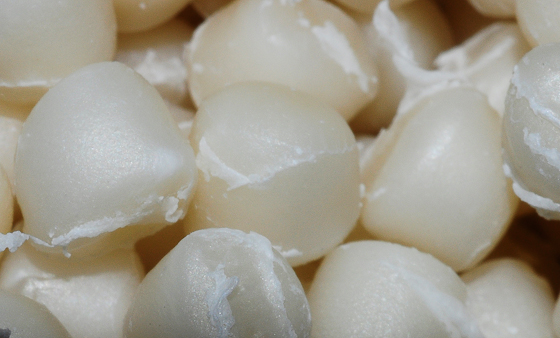
Solid Vodka Dosing is a relatively new concept from a company called NP Biopellets.  The carbon source-infused polymer beads are meant to grow bacteria in layers that could usher in a revolutionary new way to manage nutrients in aquarium water. If it works. We say “if” because although the idea and principles for solid vodka dosing are sound, there has been very little real world testing for the use of Solid Vodka Dosing in home aquaria. To be clear, these nutrient reducing pellets have nothing to do with vodka but the term reflects the regular vodka dosing which many reef aquarists have been using for years now. The Solid Vodka Dosing concept is reminiscent of the good ole Nitrex media that has been in use for freshwater aquariums for decades. According to the manufacturer NP Biopellets,  the biodegradable polymer pellets can be placed in a canister or fluidized bed filter. biopellets 2Carbon from the Biopellets will fuel the growth of nitrogen and phosphate consuming bacteria that colonize the pellet in anaerobic and aerobic successions.

The manufacturer of the NP reducing biopellets has a “how it works” page that is lackluster in details of what really drives the solid vodka dosing method. The only real details are that the media takes 2-4 weeks for bacteria to colonize in any siginificant number (which just about anyone can deduce from a basic understanding of bacterial colonization) and that 1 liter of the NP reducing Biopellets is enough media to treat around 500 liters/ 130 gallons of aquarium water. The biopellets should be placed in an area of high flow to prevent the buildup of hydrogen sulfide and to encourage strong bacterial colonization. Using this lightweight media in a fluidized bed scenario might encourage the breaking off of bacterial film that will in turn feed the aquarium corals a-la Zeovit reactor. Whether this home made marine snow is enough to feed and sustain difficult species is totally unknown.

We’re going to go ahead and call out the dealer for having very little information and concrete results for how well this solid vodka dosing product performs. There are some reports that the system is particularly suited for reducing nutrients in heavily fed non-photosynthetic aquaria but so far the only success has been with relatively easy to keep species such as Rhizotrochus and Tubastrea species. Needless to say, with all the attention reef aquarists have placed on carbon dosing reef tanks to reduce nutrients eiter through the use of ethanol or vodka, we are very excited about the solid vodka dosing approach to localizing bacterial colonies on a carbon infused substrate. Although the food is there for bacteria to grow, the biopellets are a simple food substrate and we will still likely use the biopellets with some kind of targeted bacterial cultures. This technique may be a standalone gateway to true oligotrophic reefing but we feel that it might be complimented by other bacteria stimulating techniques such as Vodka Dosing, Prodibio or Zeovit. A liter of NP-reducing Biopellets costs 50, about $75, before shipping from the EU and it can be ordered from the NP biopellets website.

Related Posts

This thing has 21 Comments

  1. Posted October 19, 2009 at 12:15 pm | Permalink

    Who’s going to be the first and try this out?

  2. Posted October 19, 2009 at 12:16 pm | Permalink

    These are pretty interesting and worth a look. I wonder how long it is before this product or other similar products start hitting the US market.

  3. Posted October 19, 2009 at 12:17 pm | Permalink

    Tell you what Ryan….you buy and I’ll try ;)

  4. Posted October 19, 2009 at 12:17 pm | Permalink

    This product has a lot of potential but even if it doesnt work very well, the concept is there for people to build on. This is VERY exciting.

  5. Taka Kamata
    Posted October 19, 2009 at 12:25 pm | Permalink

    This looks awesome product!!!! I really want to use this for my tank to replace for Vodka dosing!

  6. Ian
    Posted October 19, 2009 at 3:00 pm | Permalink

    Do they have to be periodically changed out like ZEOlites or is this a buy once product?

  7. Mark Poletti
    Posted October 19, 2009 at 3:12 pm | Permalink

    Very interesting stuff Jake and RB. I will enjoy further conversations about this product and its claims.

  8. Mark Poletti
    Posted October 19, 2009 at 3:13 pm | Permalink

    Reminder to self: DO NOT POST FROM IPHONE :)

  9. Posted October 19, 2009 at 3:17 pm | Permalink

    The vendor claims 3-6 months of useage which is considerably more time than the ZEOlites but I think this is a broad rangin number that will ultimately depend on how much nutrients are in the tank to fuel the bacterial growth. Either way, it sounds like a much better value than one month for the ZEOlites.

  10. Posted October 19, 2009 at 4:32 pm | Permalink

    Looks like my Finnish reefing pal has these in his system, maybe Tatu can chime in with an update:

    http://grumpyreefer.net/2009/09/22/weapons-of-nutrient-destruction-cone-and-pellets-with-sugar-on-top/

  11. Posted October 20, 2009 at 2:27 am | Permalink

    Dear Jake, dear all,

    thank you for your interest in our product. We understand the raising of your questions, which pleases us. The inquisitive and scrutinizing aquarist is what the hobby needs. Although our product has excited us as well, please keep in mind that protein skimmers and phosphate adsorbents are still highly recommended. Although bacterioplankton released by the BioPellets may serve as a nutritious feeding source, we would like to emphasize that other key food sources are necessary to keep certain filter or suspension feeding animals alive for prolonged time. This includes live plankton (Artemia nauplii, rotifers, phytoplankton, yeast) and artificial derivatives such as Cyclop-eeze and Reef Pearls.

    You can order our product directly from our website. We ship to all over the world, including the US.

    Sincerely,

    Tim Wijgerde
    NPBioPellets.com

  12. Posted October 20, 2009 at 2:21 pm | Permalink

    I’ve been using this media for some time now and I’ve been very happy with it. I do not use Biopellets as the only carbon source, I also dose vodka+sugar combination. I’ve been able to reduce vodka dosing to about half. I’m currently waiting for a refill to get more Biopellets, I’m planning to use 2-2.5 liters. Hopefully I will then be able to stop the vodka+sugar dosing altogether.

    Some quick comments:
    - The 3-6 months refers to time after which you might need a small refill (~10%) as pellets are used by bacteria. You don’t need to replace the pellets. Obviously the need for refills varies between tanks.
    - They do work :D The amount of bacteria this media is able to produce is amazing. After installing a new, very efficient, skimmer the productions has dropped considerably.
    - They recommend Fe-based PO4 binders because many invertebrate foods have unnaturally high P:N ratio.
    - For me the best feature is the ability to produce bacterioplankton :)

  13. Posted October 20, 2009 at 2:28 pm | Permalink

    Hey Tatu, thank you so much for stopping by and giving us a rare first hand account about the new biopellets media. Can you describe a little bit more about the bacterioplankton production ability? It seems counterintuitive that an immobile bacterial food source would produce a free floating bacterial population better than adding a free flowing, liquid carbon source. It’s good to know that you’ve been doing well while using both fluid and solid vodka dosing methods.

  14. Posted October 20, 2009 at 4:35 pm | Permalink

    LOL, it seems I left out small detail: I get bacterioplankton when I stir the pellets ;) The manufacturer recommends using Biopellets in a fluidizing filter which will (obviously) constantly release small number of bacteria. The pellets are lightweight but very hard and are perfect for such a filter.

    I will probably get a fluidizing reactor soon although I do like the larger bacteria aggregates that less frequent disturbance produces (many soft corals and gorgonians seem to open very well with this type of food).

  15. Len
    Posted October 20, 2009 at 5:51 pm | Permalink

    OK all I need to know is how many pellets are equivalent to 5 shots? You know some one is going to try it.

  16. Posted October 20, 2009 at 7:29 pm | Permalink

    The new Jello-shooters Len? ;)

  17. iggy
    Posted October 29, 2009 at 4:02 pm | Permalink

    Well if bioballs work how would you know if these work better?

    You’d have to put them in use with a trickle filter and see if nitrates go down. Looks more suited to highly stocked FOWLR tanks right now. Maybe they should put out some more info… It has my interest though.

  18. Paul_PSU
    Posted October 29, 2009 at 6:40 pm | Permalink

    My problem is with it only being offered in Europe I got quotes of $60 Euros for 1 liter and $24 Euros shipping. That’s $124 for 1 liter!

    Tatu, how much did you pay for 1 liter?

  19. Posted October 30, 2009 at 12:11 pm | Permalink

    Aquarium Specialty is pleased to announce that we are now the exclusive distributor on NP Biopellets in North America. Please click on the link if you would like to purchase this new and exciting product. We are offering the product in 2 sizes, 500 ml and 1000ml.

    Dealer inquiries welcome.

    http://www.aquariumspecialty.com/catalog/index.php?cPath=44_778

  20. Posted October 31, 2009 at 8:37 am | Permalink

    These look promising. I like the marine snow and I’m not a fan of having to dose daily.
    I might have to try these out on the new tank.
    Thanks for the info Tatu.

  21. James Dawson
    Posted November 7, 2009 at 10:12 pm | Permalink

    I agree that these have alot of potential. My only concern is $100/litre is awfully pricey! I think if it works as advertised and they dropped the price to a more reasonable level they could really dominate and takeover the market from zeolith-based systems particularly!

Post a Comment

Your email is never published nor shared. Required fields are marked *

*
*