
Hydor working on new “better” Koralias?
3 Comments Leave a comment
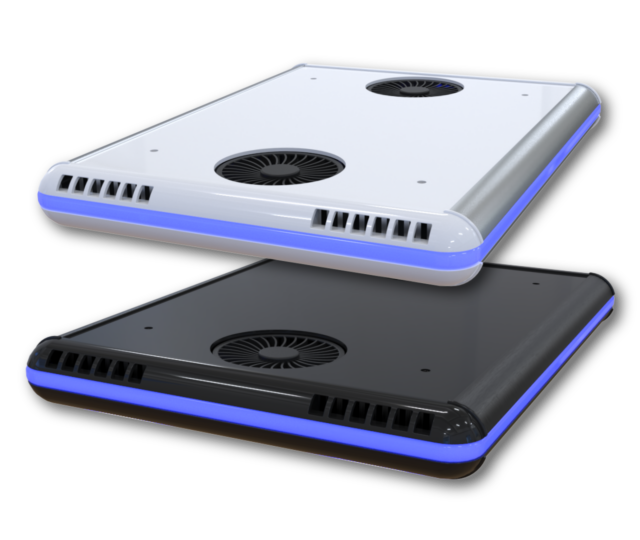
It sure looks likes Hydor is set to launch a new set of Koralia pumps soon. A recent ad has appeared in CORAL magazine that sheds some light on the “new” pumps. They are said to be a shaft-less design with 50% less energy (compared to what we would like to know) and come in 3 new models 750gph, 1050gph, 1400gph. Is this a new Hydor Koralia or is it just a new marketing trick?
Thanks Joey!
Leave a commentGFP “infection” radically alters the look of stony corals, like the Green Jacket
2 Comments Leave a commentGreen Fluorescent Protein is one of the most ubiquitous and recognizable fluorescent colors in soft and stony corals. In some cases the GFP is expressively produced, sometimes it’s a byproduct and recently reef aquarists have observed a third phenomenon involving GFP: infection. GFP “infection” describes the spread of a solid fluorescent green color through the tissues of a stony coral in a way that is disjointed from the ‘normal’ growth of coral tissue, skeleton and pigmentation. Whether the spread of the GFP is an infection in the classical sense of the word, or another biological process is not at all understood or explained and it remains to be seen how the GFP infection progresses long term. The coral featured in this video is called the ‘Green Jacket’ and it was first created by Steve Garrett of Garrett’s Acropolis. This specimen was the inspiration for a full article on GFP infection in the fourth issue of Reef Life Magazine (hitting newstands and finer LFS any day and also in digital format right now). Follow the break for more pics and a full rundown of other GFP infected corals you can find around the net.
Leave a commentPolyp Lab One tackles Calcium, Alkalinity and Magnesium in single product
9 Comments Leave a comment
Polyp Lab recently brought One, an all-in-one dosing product, to the market taking two-part dosing a step further with the addition of magnesium to traditional calcium and alkalinity solutions. The Canadian manufacturer has combined calcium acetate, magnesium acetate and hydroxide salts to deliver levels of 400 ppm Ca, 1,300 ppm Mg and alkalinity of 7 dKH. The company planned One to deliver these parameters on the low end to help prevent overdosing. According to the website:
One is engineered from two forms of acetate and hydroxide salts. It contains calcium ions, magnesium ions and acetate ions. When dosed, the calcium and magnesium ions are freely available for uptake by corals, clams and other reef organisms. The acetate ions are promptly metabolized by bacteria to create biologically available bicarbonate. This process provides alkalinity to your reef aquarium. The hydroxide salts in our product are present to help maintain a higher pH as well as to provide more alkalinity.
Polyp Lab also recommends on its FAQ page using One as a maintenance product and suggests hobbyists raise their tank’s levels of calcium, magnesium and alkalinity to the desired levels with other products such as calcium chloride or baking soda before beginning the One dosing regimen. The recommended dose ranges from one capful (5 ml) a day per 50 gallons for new and softie tanks all the way up to four capfuls (20 ml) per 50 gallons for heavy SPS tanks. Not a daily doser? Polyp Lab also documents a twice weekly dosing schedule. Through years of collective experiences, we have learned a lot in this hobby and are rightfully skeptical of “all-in-one” solutions. We have to wonder the long-term benefits of this product to see if it matches it’s claims and wonder why we haven’t seen similar products on the market before. Many reefers will most likely opt for the control of each individual parameter via two-part with magnesium supplementation as needed or through advanced dosing techniques like the Balling Method. Interested in trying it out? One is available from online at Marine Depot for $21.95 USD for a 500 ml bottle.
Leave a commentPetition targets 83 coral species for U.S. endangered species list protection
6 Comments Leave a comment
The Center for Biological Diversity recently prepared and filed a scientific petition to have 83 coral species listed as threatened or endangered under the Endangered Species Act. The petition, filed on October 20, 2009, looks to use the powers of the Endangered Species Act to protect these corals identified as most the most vulnerable in U.S. waters. Many of these corals have suffered greatly with over 30 percent loss in the last 30 years with increased ocean temperatures and CO2 levels contributing the danger of catastrophic and potentially unrecoverable mass bleaching. Recognizable corals available in the hobby include on the list are the ever-popular Flowerpot coral (Alveopora allingi), branching frogspawn (Euphyllia paradivisa), and 22 types of Acropora, to name a few. As hobbyists we often pay close attention to the promotion of propagated and tank-raised corals but the additional of these corals to the Endangered Species list could make it harder for the import of these specific corals from non U.S.-protected waters. This makes it even more important to do our part to keep these corals thriving within the hobby through education and promotion of coral propagation techniques. Will also be interesting to see what impact this may have on CITES legislation and other programs such as Indonesia’s coral quotas and Papau New Guinea’s SEASMART program. Complete list of all 83 corals listed on this petition after the break. Continue reading “Petition targets 83 coral species for U.S. endangered species list protection” →
Leave a comment
AquaStatix makes your iPhone fishy
9 Comments Leave a comment
If you’re one of the growing number of iPhone users and looking for a robust, tank logging application for your device check out AquaStatix. The app (available for $1.99 USD from the iTunes App Store) will let you set up an unlimited number of tank journals allowing you to name and designate each one as freshwater, saltwater or reef and track 13 different water parameters. Besides the logging capabilities, the app lets you view your results on a simple graph showing your tank’s trends for the previous eight weeks. For our international friends the app also lets you chose between gallons and liters for volume and centigrade or Fahrenheit temperatures. One feature the app is lacking is the ability to export or view the information from outside the iPhone leaving the information to reside solely on your device. While this is a app geared towards both sides of hobby, some reefers have indicated the app does not let you specify certain readings like salinity beyond the tenths decimal place. So your salinity reading of 1.023 would either have to be logged as 1.0 or 1.1. Hopefully this can be addressed in more current versions before it’s a prime-time candidate for the hardcore reefer. The iPhone aquarium app community is beginning to grow and we like what we are seeing. For Neptune Apex and Digital Aquatics owners developers have created the AquaNotes and iReef apps allowing you remote control and monitoring. Seachem also recently released their free app Dose, a simple dosing calculator. While we love the creativity and beautiful apps for the iPhone, we are hoping developers also branch out into other smartphone markets with app stores from Windows Mobile, Android, Palm and Blackberry available now. More screenshots and full list of parameters covered after the break. Continue reading “AquaStatix makes your iPhone fishy” →
Leave a commentFluval M series Heaters get shown off on Video
One Comment Leave a comment
Fluval has released their new M Series of heaters along with a M series Video to go along with it. The video will go on in detail about how these heaters are made in Europe using “superior components and construction. Some of the features include: “heat and shock resistant borosilicate reflective glass tube, heat resistant techno-polymer conductor harness, high temperature resistant heating element, silver nickel contact points, machine assembled thermostatic blade,computer calibrated thermostat and 16 point quality assurance program.” Another feature is their “reflective technology” which is said to help maintain the aquariums natural look as it reflects its surroundings. These Fluval M series aquarium heaters will be available in 50, 100, 150, 200 and 300 watt versions with a MSRP starting at $28.99. Have a peak below for the video.
Continue reading “Fluval M series Heaters get shown off on Video” →
Leave a commentElos Prototype LED full fixture light spotted
3 Comments Leave a comment
While in Italy I was able to spy a new prototype model of LED lighting with the Elos brand name associated with it. Apparently Elos is mulling the idea around of producing this model which uses the guts of the elite unit along with T5 actnic’s for supplementation. This fixture is said to have the same power as 2 150 watt metal halides and only eats up a total of 100 watts, along with all the other advantages of LED lighting that no doubt you are already familiar with. It carries a total of 5 “elite” like LED Elos pods which produce a significant amount of light. Drop down below the break to see more photos of the new prototype unit that you haven’t seen before.
Continue reading “Elos Prototype LED full fixture light spotted” →
Leave a commentNew ORA Coral: Ice Tortuosa released
4 Comments Leave a commentORA has released their new ICE tort, or Tortuosa. Yes, it looks like other corals we’ve seen, but ORA assures us its different as their PR states:
The ORA™ Ice Tort has the typical Tortuosa branching growth form with a deep sea green base and glowing baby blue branch tips. This coral may look similar to the standard Tortuosa that we sell, but rest assured it is not the same thing. In addition to a different color pattern, this slow growing variety has thicker and considerably longer branches than its more common counterpart. The contrast of the dark base, blue polyps with green rims and almost white tips is stunning. Interestingly, all of the Ice Torts in the ORA greenhouse spawned 2 weeks ago.
You can expect to start seeing this ORA coral at local and online vendors very soon.
Leave a commentIn Tuamotu, Maxima Clams are the Reef Builders
4 Comments Leave a comment
Tuamotu Maxima clams are the hottest thing to hit the Tridacna reef scene since the Maxea hybrids from earlier in the year. This past week a shipment of large magnificent Tridacna maxima was imported into the U.S. by Pacific Aqua Farms from atoll lagoons of East Tuamotu, a very special ecoregion for Maxima clams that is unlike any other place on earth. The specimens that were imported in this shipment had such a diversity of color, vibrance and patterns that this could be the best shipment of clams ever imported, rivaling even Phonpei and Red Sea clams of decades past. Perhaps it’s because T. maxima is the only naturally occuring giant clam species in the region. Maybe it’s because the clams are collected in a lagoon where
the species forms hills and islands consisting solely of their shells that are so abundant in the region that they have a name: ‘mapiko’. It could be that due to apparently well laid out resource management the size of the harvested clams have to be greater than 12cm, or almost 5 inches. Whatever the reason (probably all of these mentioned), like collecting corals from the Coral Triangle, harvesting a giant clam species where it occurs at reef building densities of 200 individuals per square meter is like picking the ripest produce right at the farm; it’s bound to be good! A good number of these Atoll lagoon-born East Tuamotu clams have already been distributed to finer retailers around the country. Although the clams just arrived last week, BlueZoo is already selling these bad boys. Look for these to start showing up at your favorite livestock vendors once they’ve settled in and been quarantined and conditioned. For all of you that are about to start crying over the removal of these magnificent Maxima clams from their environment consider this: The annual quota of Maxima clam flesh for human consumption in Tahiti and Tuamotu is 50 tonnes. That’s a 100,000 lbs without the shell. Tuamotans and Tahitians really eat a lot of clam meat and our handful of live specimens w
ill never compare with the numbers of Maxima clams that make it to their kitchen table. This shipment of clams was a long time in the making with full resource management plans implemented, documentation, CITES paperwork and future accountability for the sustainability of the resource. Furthermore, giant clam aquaculture is nascent in the East Tuamotu islands and we should expect to see the progeny of these magnificent Tuamotu Maxima clams entering the global reef aquarium market in the next few years. Huge thanks to Kris Wray and Kevin Kohen for supplying most of the pictures, many more of which can be seen after the break.
Continue reading “In Tuamotu, Maxima Clams are the Reef Builders” →
Leave a commentReef Builders Celebrates 2000 Posts
9 Comments Leave a commentThis post, this one you are reading right now is the 2000th post that has appeared on Reef Builders. This is very exciting to see Reef Builders grow as fast as it has, especially since it has been going for about 2 years. That’s incredible growth. Growth that has been contributed to a lot of reasons, the biggest of which is we have a great team of professional writers like Jake Adams, Scott Fellman, Brian Blank, Guin Burnard, Rich Ross, Taka Kamata, Christine Williams and most recently Dr. Paul Whitby. As a side note, we would like to thank you, our dear readers, because without you this wouldn’t be possible. This includes thousands of obsessive hobbyists, website owners, wholesalers, distributors, retailers and manufacturers who refresh our home page daily trying to crash our servers and get the latest scoop on the saltwater industry. Besides our readers we have an excellent array of some of the top advertisers in the business and thank them for supporting us. What is next with Reef Builders? We will continue to expand and have a lot more planned for the months ahead, but we’re not going to divulge the details of exactly what we’re doing next. That would just spoil the fun, now wouldn’t it? Until next time…
Ryan Gripp
Reef Builders® Founder
We obsessively cover the saltwater industry™