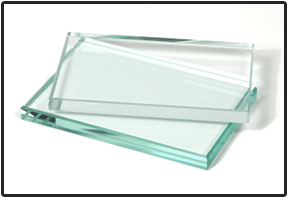
 Most likely when deciding upon an aquarium you might have considered low iron glass. Glass which has many uses and applications and the aquarium industry is one of the smallest industries in which it prospers from. Most glass is made with silica ( Quartz sand) and then sodium carbonate (Na2CO3) is then added which helps the glass reach a lower melting point of 2700 °F. This increases the efficiency of the melting furnace thus reducing costs. The problem with adding sodium carbonate is the glass because water soluble so lime (calcium oxide (CaO) is then added to prevent this from happening. From there then magnesium oxide (MgO) and aluminum oxide might be added to help with chemical durability.
The green tint that you’ll see in most aquariums is a direct result from using lime (sodium carbonate Na2CO) when making glass. Limestone has a greenish tint to it already and you can easily see that if you have traveled to a state park or museum to see it in person. The resulting glass produced by this process is then called “soda lime” glass and accounts for over 90% of the glass that is produced today.
Where does this iron glass come from? Iron is commonly added to glass as because it gives more “sparkles” which is a result of increased refractive properties. Another property that is added as well is lead. Lead too gives a increased sparkle property and is very popular additive when making glass.
Low Iron glass as the name suggests is low on Iron. Other common names for this in the aquarium industry are STARPHIRE® glass which is actually a brand name of glass made by PPG. PPG might have been one of the first producers of low iron glass but it certainly isn’t the last. Another company named Guaridan produces a brand of low iron glass called UltraWhiteâ„¢ which is very clear. If you purchased an aquarium that is “High Clarity” then odds are the aquarium glass is coming from overseas from China. The company making the aquarium wanted to keep costs low and is not using a brand name of glass such as Starphire or UltraWhite. We haven’t noticed any difference between a standard “high clarity” glass and other name brand products, but we are sure that those respective companies would gladly tell us why their glass is indeed better.
Low iron glass is clear no doubt, but it is isn’t the clearest glass you can buy. If your reading this from eyeglasses then yes you are wearing some of the clearest glass the average consumer can buy, optical grade glass.Another application in which glass is very important is solar panels, one of the biggest consumers of glass besides windows is the rapidly expanding green market is the solar industry. You’ll most likely hear of increased efficiency from solar panels and some of these efficiency upgrades are a direct result of clearer glass.