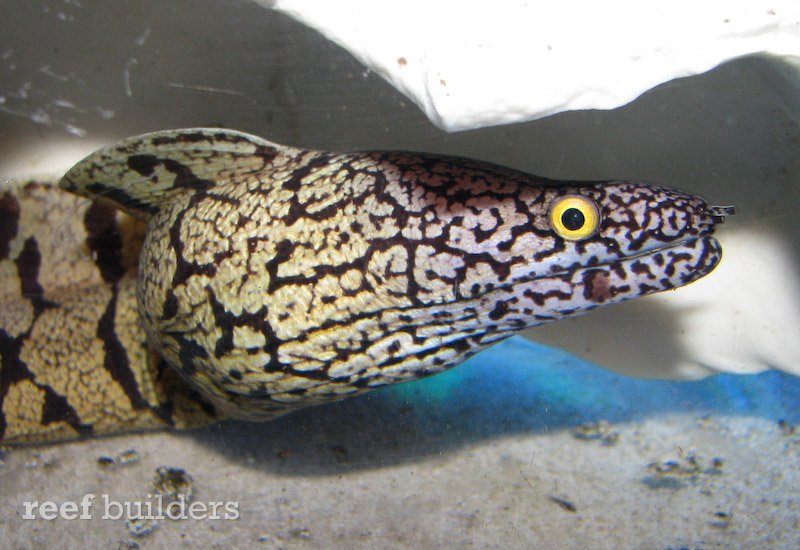

If you want to see a diverse selection of really oddball fish, Long Island’s Country Critters is the bee’s knees and it was a great pleasure to pass through their facility last week. You might recall a video that we posted way back of a pair of Japanese Zebra Horn Sharks, those were from Country Critters and now they are in the boss’s home aquarium; how cool is that? One of our prime photographic targets on the brief kamikaze photo mission was the extremely rare Berndti and Skeletor eels which we first posted a couple of weeks ago. The skeletor eel, Echidna xanthospila seems kind of creepy but we gotta say the Berndti eel is drop dead gorgeous.  The black marbled and light yellow body, blue face and bright yellow eye makes this eel stand out from the other Anguilliformes. Another amazing fish that we saw but didn’t even know was possible was a 6″ maculosus angelfish with full juvenile coloration. Whatever caused this individual to retain it’s juvenile coloration well into adolescent size is unknown but we really hope that a Reef Builders reader will go into Country Critters, buy that fish and report back as to how this freak Maculosus angelfish develops over time. Some other stand out fish included the yellow spotted anthias, Pseudanthias flavoguttatus. a tasselled wobbygong, and a visit to a nearby freshwater stingray farm that works with Country Critters to produce some of the most amazing Leopoldi stingrays. We’ll soon have another post on the stingray farm but in the meantime, enjoy the eye candy after the break.